


Australia has taken a major step towards achieving its net zero goals with the release of a new roadmap outlining the nation’s potential to lead in novel carbon dioxide removal (CDR) technologies.
Developed by CSIRO, Australia’s national science agency, the Australian Carbon Dioxide Removal Roadmap explores how a new CDR industry could help the country – and the world – reach net zero emissions under the Paris Agreement.
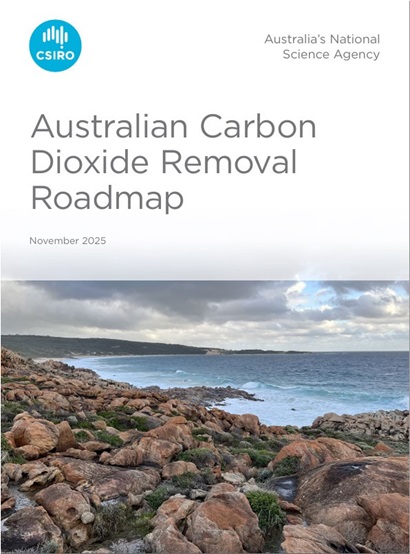
According to the roadmap, Australia may need to remove between 133 and 200 megatonnes of CO₂ from the atmosphere every year by 2050. CDR differs from traditional carbon capture and storage (CCS) by targeting carbon already present in the atmosphere rather than preventing its release.
The report assesses several innovative approaches, including direct air capture and storage, biomass carbon removal, ocean alkalinity enhancement, and enhanced rock weathering. It also provides a framework for government, industry, researchers, and communities to work together in developing this emerging sector responsibly.
CSIRO CarbonLock Director and report co-author Dr Andrew Lenton said Australia’s renewable energy capacity and natural resources give it a strong edge in scaling up CDR.
“Australia’s unique combination of resources and technology expertise offers a competitive advantage for large-scale deployment of novel carbon removal. Emerging methods such as mineral carbonation will only strengthen this position.”
The modelling shows that even under conservative assumptions, Australia could remove up to 330 megatonnes of CO₂ annually by 2050 through these novel technologies. While only part of that capacity would be needed domestically, the surplus could help Australia participate in global carbon markets.
CSIRO Futures Associate Director Vivek Srinivasan said while the costs of novel CDR technologies remain high, their potential is growing rapidly.
“Across Australia and overseas, these technologies are already proving their viability. As costs decline and demand increases, we have a real opportunity to build a robust CDR industry here.”
The roadmap emphasises that achieving this potential will require investment in research, infrastructure, and workforce training, alongside transparent engagement with communities and Traditional Owners. Equitable benefit-sharing and cultural inclusion are seen as essential for long-term legitimacy and success.
Strong policy support, innovation-friendly regulation, and international collaboration will also be key to fast-tracking deployment.
The initiative is led by CSIRO in partnership with the Department of Climate Change, Energy, the Environment and Water, Google, Geoscience Australia, and several state governments. It builds on decades of CSIRO research in carbon management and climate innovation.
Support our Journalism
No-nonsense journalism. No paywalls. Whether you’re in Australia, the UK, Canada, the USA, or India, you can support The Australia Today by taking a paid subscription via Patreon or donating via PayPal — and help keep honest, fearless journalism alive.
