

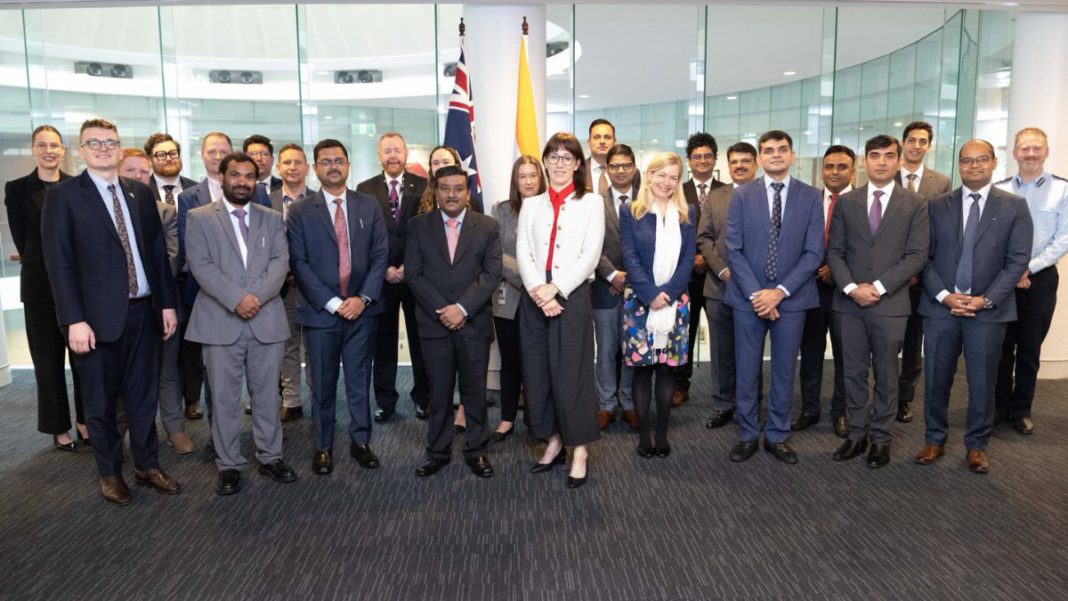
Australia and India have reaffirmed their shared commitment to countering terrorism and violent extremism across the Indo-Pacific, following the 15th annual meeting of the India–Australia Joint Working Group (JWG) on Counter Terrorism, held in Canberra.
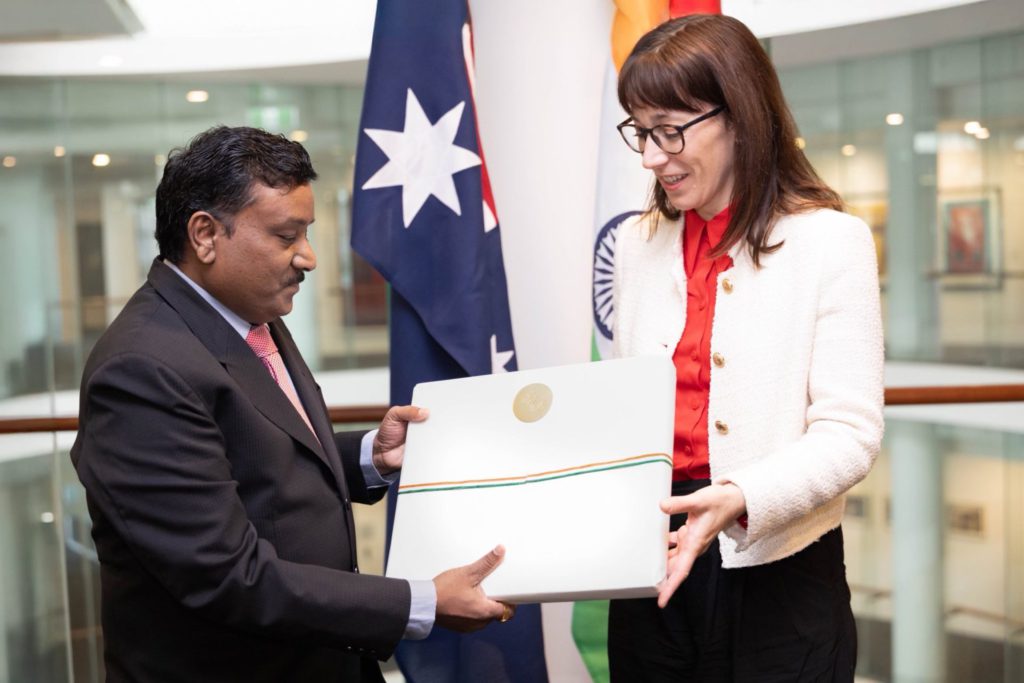
The high-level dialogue was co-chaired by Gemma Huggins, Australia’s Ambassador for Counter-Terrorism and Dr Vinod Bahade, Joint Secretary (Counter Terrorism) at India’s Ministry of External Affairs. The two sides discussed the evolving domestic, regional and global terrorism landscape, emphasising closer cooperation in law enforcement, judicial coordination, maritime security, and information sharing.
“🇦🇺 Australia and India 🇮🇳 remain committed partners in preventing and countering terrorism and violent extremism across the Indo-Pacific and beyond,” said Ms Gemma Huggins.
“We valued the strong and ongoing collaboration demonstrated at the 15th annual Australia-India Counter-Terrorism Joint Working Group.”
Focus on radicalisation and cross-border threats
According to officials, India raised serious concerns about Khalistan-linked radical activity in Australia, urging continued vigilance and cooperation between law enforcement agencies. The Australian side acknowledged India’s concerns and reiterated its support for maintaining peace and stability within the Indian diaspora community.
Both nations also condemned the April 22 terrorist attack in Pahalgam, Jammu and Kashmir, in which multiple civilians were killed, with Australia expressing solidarity with India in its fight against terrorism.
The discussions underscored the importance of timely intelligence exchange, joint operational coordination, and addressing the misuse of emerging technologies — including artificial intelligence, encrypted communications, and drone systems — for terrorist purposes.
Strengthening global and regional cooperation
The two countries reaffirmed their intent to deepen collaboration across multilateral platforms such as the United Nations (UN), the Global Counter-Terrorism Forum (GCTF), the Financial Action Task Force (FATF), the Indian Ocean Rim Association (IORA), the ASEAN Regional Forum (ARF), and the No Money for Terror (NMFT) initiative. Both sides also agreed to enhance coordination with QUAD partners — the United States and Japan — to combat terrorism financing and radicalisation networks across the Indo-Pacific.
Recognising that terrorism is evolving through digital and transnational networks, the two sides stressed the need for “concerted global efforts” to address these emerging threats.
Engagement with Australian security agencies
During their visit, the Indian delegation met with senior officials from the Australian Federal Police Counter-Terrorism Unit, the National Emergency Management Agency, and the Maritime Border Command. They also visited the Australian Watch Office and the National Crisis Coordination Centre, further strengthening institutional ties and operational awareness.
Both sides expressed satisfaction with the progress made under the Comprehensive Strategic Partnership and agreed to expand joint training, capacity-building, and crisis-response exercises.
The meeting concluded with a joint agreement to convene the 16th JWG on Counter Terrorism in New Delhi in 2026.
As terrorism and violent extremism continue to evolve across borders, both nations reiterated that their enduring partnership — rooted in trust, shared democratic values, and regional stability — remains vital to ensuring security across the Indo-Pacific and beyond.