

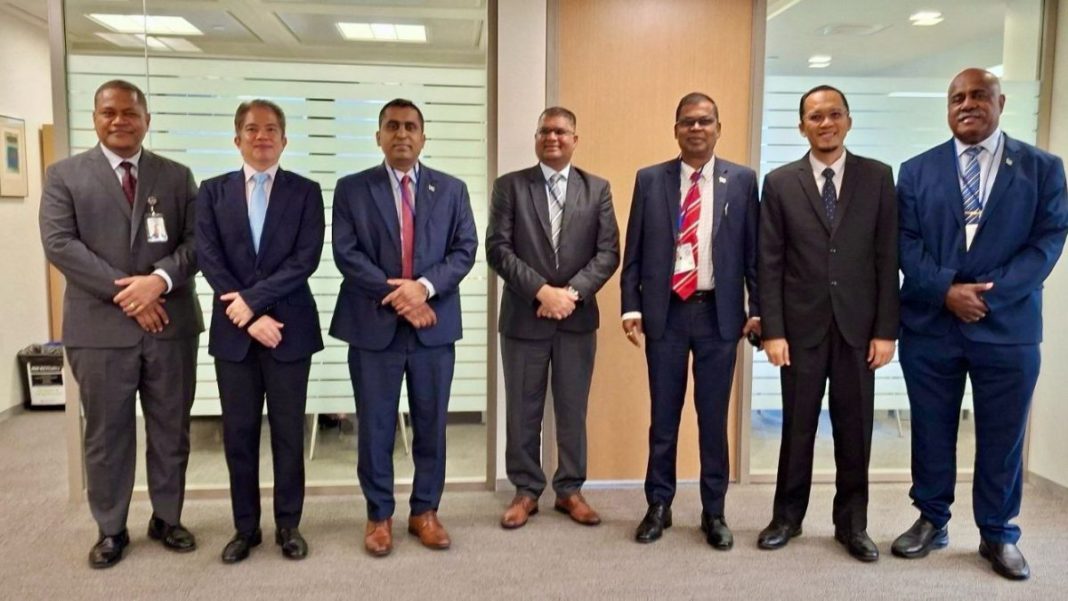
Fiji’s Deputy Prime Minister and Minister for Finance, Prof. Biman Prasad, has reaffirmed the nation’s commitment to sustainable development and regional cooperation during high-level meetings at the 2025 IMF and World Bank Annual Meetings in Washington D.C.
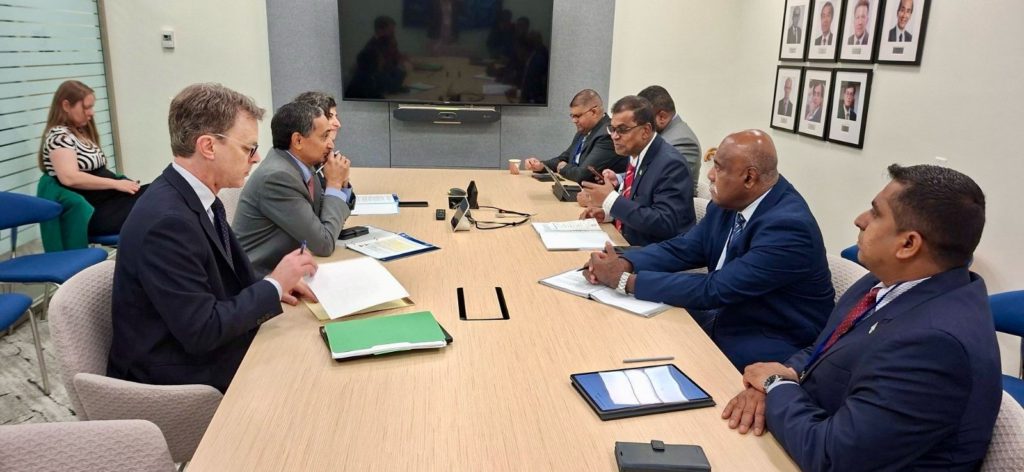
On the sidelines of the global finance summit, Prof. Prasad met with the IMF’s Director for Asia-Pacific Development and the IMF Executive Director for Asia-Pacific, where discussions focused on Fiji’s economic performance, fiscal strategy, and long-term growth vision.
He underscored the government’s focus on fiscal discipline and sustainable growth, outlining reforms aimed at enhancing the ease of doing business and improving the regulatory environment.
“Our government remains committed to a robust medium-term fiscal framework to guide long-term growth and stability,” he said, noting that political stability would play a key role in shaping a predictable economic landscape.
Fiji’s ambition, Prof. Prasad emphasised, is to achieve high-income status by 2050 through policies that prioritise sustainability, institutional strength, and regional partnerships.
In related discussions, Fiji participated in an IMF roundtable on small developing states, with emphasis on providing tailored policy advice and technical assistance to nations like Fiji and Tonga. Participants stressed the importance of capacity-building, coordinated policymaking, and balancing economic reform with social stability. The IMF reaffirmed its commitment to supporting small island economies through sustainable economic policies and regional engagement.
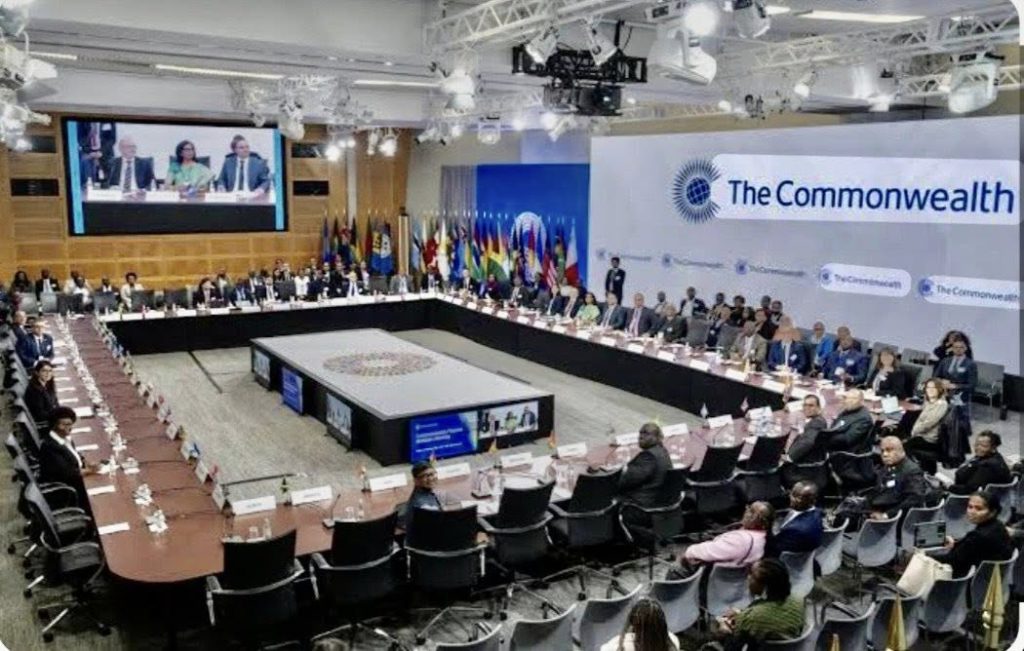
Prof. Prasad also represented Fiji at the Commonwealth Finance Ministers’ Meeting (CFMM), held alongside the IMF and World Bank meetings, under the theme “Strengthening Economic Resilience amidst Economic Policy Shift.”
He commended Commonwealth Secretary-General Shirley Botchwey for the organisation’s forward-looking Strategic Plan 2025–2030 and urged stronger collective engagement, particularly at a time when democratic systems face increasing pressure.
Highlighting the Pacific’s proactive role, Prof. Prasad called for deeper collaboration through mechanisms such as the Pacific Economic Ministers’ Meetings and alignment with the Pacific 2050 Strategy. He also reiterated that climate change must remain at the heart of the Commonwealth’s agenda.
“The Commonwealth can become a powerful free trading bloc if member countries strengthen cooperation, improve access to development finance, and leverage shared advantages such as language and legal systems.”
With Fiji positioning itself as a regional voice for resilience and inclusivity, the meetings in Washington underscored the country’s growing influence in shaping sustainable and cooperative economic policies across the Pacific and beyond.
Support our Journalism
No-nonsense journalism. No paywalls. Whether you’re in Australia, the UK, Canada, the USA, or India, you can support The Australia Today by taking a paid subscription via Patreon or donating via PayPal — and help keep honest, fearless journalism alive.
