


International students are much more than a statistic — they are a vital part of New South Wales’ economy, innovation, and cultural fabric, according to a landmark Business NSW report.
The report, titled “Economic and Social Contributions of International Students to NSW,” introduces a new framework to measure the impact of more than 328,000 international students who study, live, and work across the state each year — capturing contributions across business, education, the visitor economy, society and culture, and long-term alumni networks.

For too long, public debate has reduced international students’ impact to two narrow categories – tuition fees and living expenses. This report broadens that view by recognising the far-reaching benefits international students bring to NSW. At the launch, NSW Parliamentary Secretary for Trade and Small Business, Emily Suvaal MLC, said,
“International students are not just visitors – they are part of the fabric of our state.”
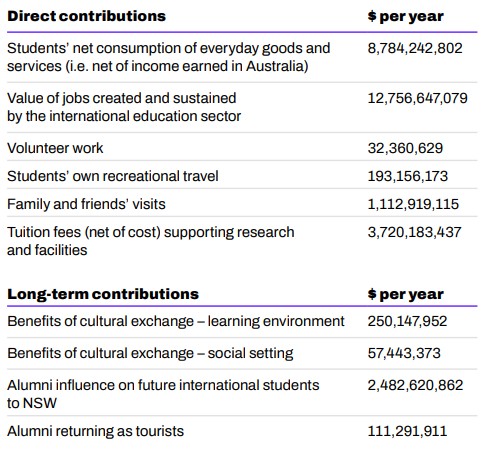
The framework highlights that international students’ spending sustains local jobs, fills workforce gaps, and drives productivity across sectors from retail to transport. Their tuition fees fund cutting-edge research, state-of-the-art facilities, and world-class teaching that benefit local students and strengthen NSW’s innovation ecosystem.
The report also notes that international students and their visiting families contribute significantly to the tourism sector, bringing new spending to both regional and urban areas.
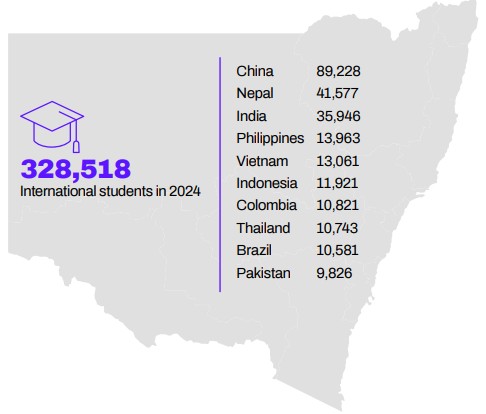
Beyond the dollars, students enrich communities through volunteering, cultural exchange, and participation in local life, making NSW more globally connected and vibrant. The impact does not end at graduation — alumni continue to contribute as investors, trade partners, and advocates for NSW, while inspiring future generations of international students.
According to the report, international education is NSW’s second-largest export, generating $12.8 billion in total economic activity and supporting nearly 120,000 full-time equivalent jobs.
Students also contributed $32.4 million in volunteer work and $2.5 billion in long-term alumni and cultural value.
The sector has shown remarkable recovery since the pandemic. In 2020, international education contributed $11.4 billion and supported 95,000 jobs before COVID-19 disruptions. By early 2023, enrolments had rebounded to over 208,000 students, an increase of nearly one-third from the previous year.
Business NSW said the findings are a timely reminder of the immense and growing value of international education — not just as an export sector but as a driver of social cohesion and global connection.

Paul Nicolaou, Executive Director of Business Sydney, praised the NSW Government and Study NSW for their ongoing support of international education and highlighted the sector’s critical economic and social contributions.
Nicolaou stressed that international students are vital to the economy and communities, filling key workforce gaps and fostering lasting cultural and regional connections.
“International students are part of the lifeblood of our economy and communities. They fill so many vacancies in key workforce and skilled areas that are subject to acute labour shortages. Their presence also builds close bonds in our region that last lifetimes and cross generations,” said Paul Nicolaou.
“This report quantifies the benefits they deliver and highlights why it is so important to separate international education from the immigration debate.”

Prof. Grace Li from the University of Technology Sydney echoed this sentiment in a post on LinkedIn, saying the real story lies beyond the economic figures.
“Beyond the billions lies the real story — the friendships built across borders, the ideas exchanged in classrooms and workplaces, and the many ways international students make NSW more globally connected and culturally alive.”
Prof. Li added that uncertainty created by proposed enrolment caps, visa changes, and funding pressures has left universities and communities anxious.
“If the contribution of international students is this substantial — economically, socially, and culturally — then the question we should be asking is not how to limit them, but how to better support and integrate them.”
The report concludes that sustaining NSW’s position as a top global study destination requires recognising, celebrating, and investing in the full spectrum of international students’ contributions — a message that Business NSW hopes will resonate in policymaking circles, business forums, and even at backyard barbecue chats.
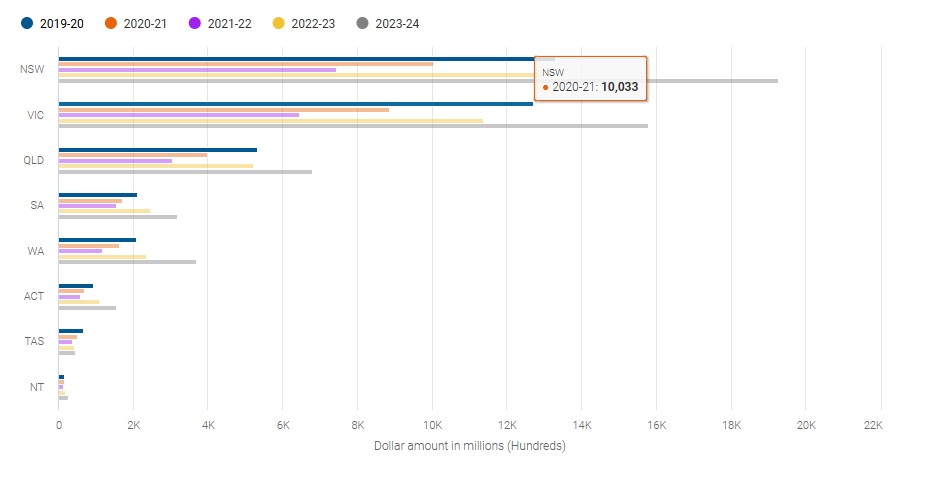
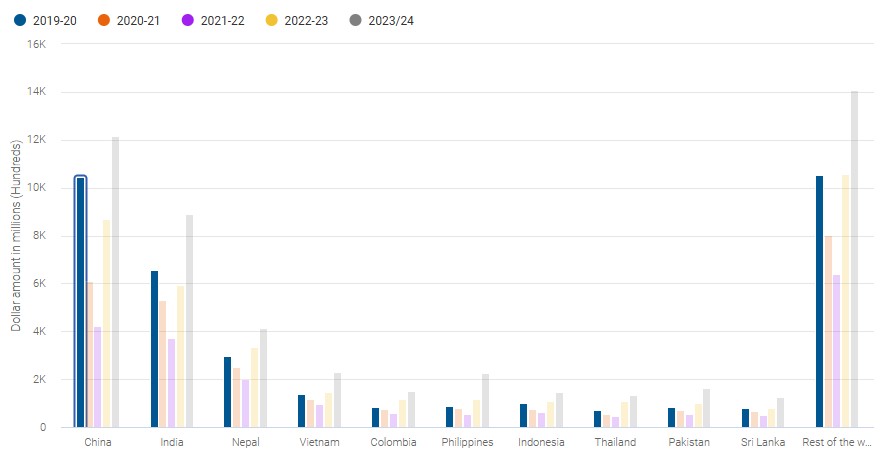
At the national level, international education contributed $51 billion to the Australian economy, including $30.2 billion in goods and services and $20.6 billion in tuition fees, further underscoring the sector’s vital role in Australia’s post-pandemic recovery.
Support our Journalism
No-nonsense journalism. No paywalls. Whether you’re in Australia, the UK, Canada, the USA, or India, you can support The Australia Today by taking a paid subscription via Patreon or donating via PayPal — and help keep honest, fearless journalism alive.
