

Wage theft in Australia has more than doubled over the past five years, with thousands of workers missing out on pay they are legally owed, according to a new analysis by software company Reckon using Fair Work Ombudsman data.
It is reported that between the 2019–20 and 2023–24 financial years, over 16,700 investigations into potential underpayments were completed, revealing that 9,401 businesses — more than half — had failed to comply with wage laws.
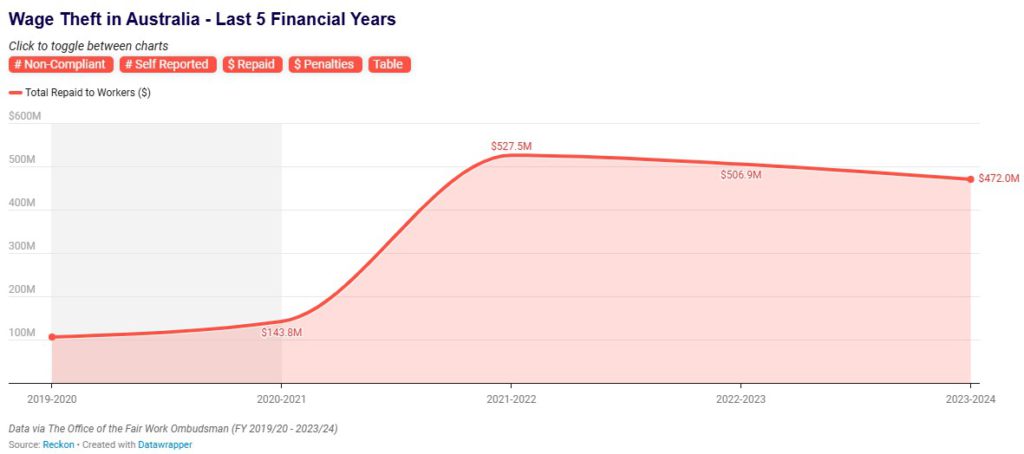
The investigations led to more than $1.76 billion being repaid to workers, underscoring the widespread impact of underpayment across the country according to research done by Reckon.
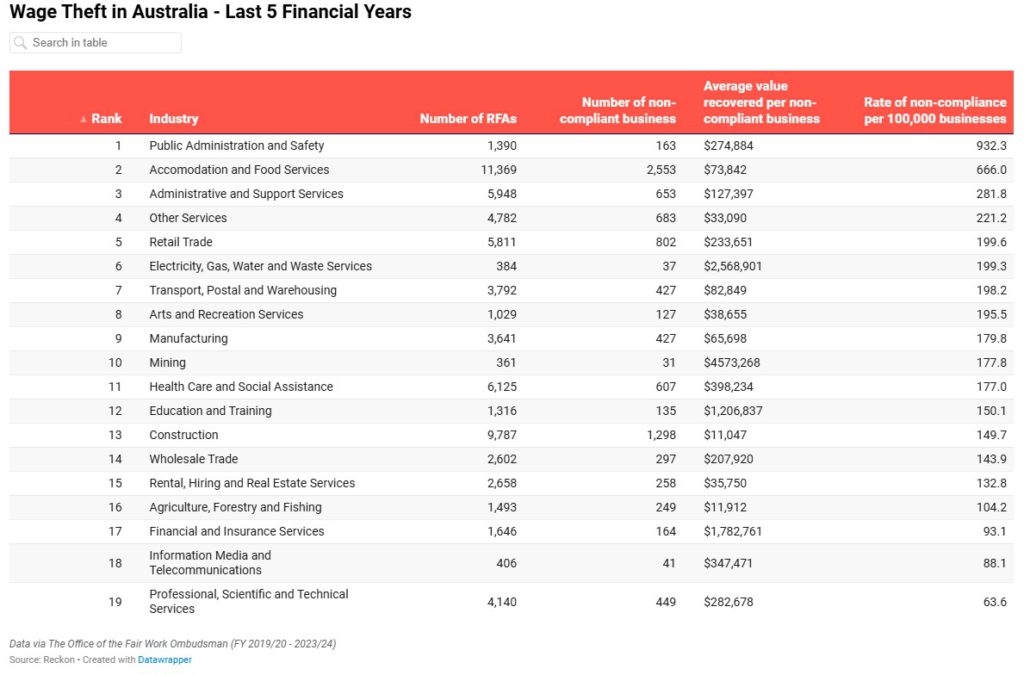
The sectors with the highest rates of non-compliance were public administration and safety, followed closely by accommodation and food services. The former recorded 932 non-compliant businesses per 100,000, while hospitality not only ranked second for non-compliance but also received the largest number of requests for assistance, with 11,369 complaints lodged during the five-year period.
Other industries featuring in the top ten for non-compliance included administrative and support services, retail, utilities, transport and warehousing, arts and recreation services, manufacturing, and mining. Mining led in terms of the average amount recovered per business, with more than $4.5 million returned to workers.
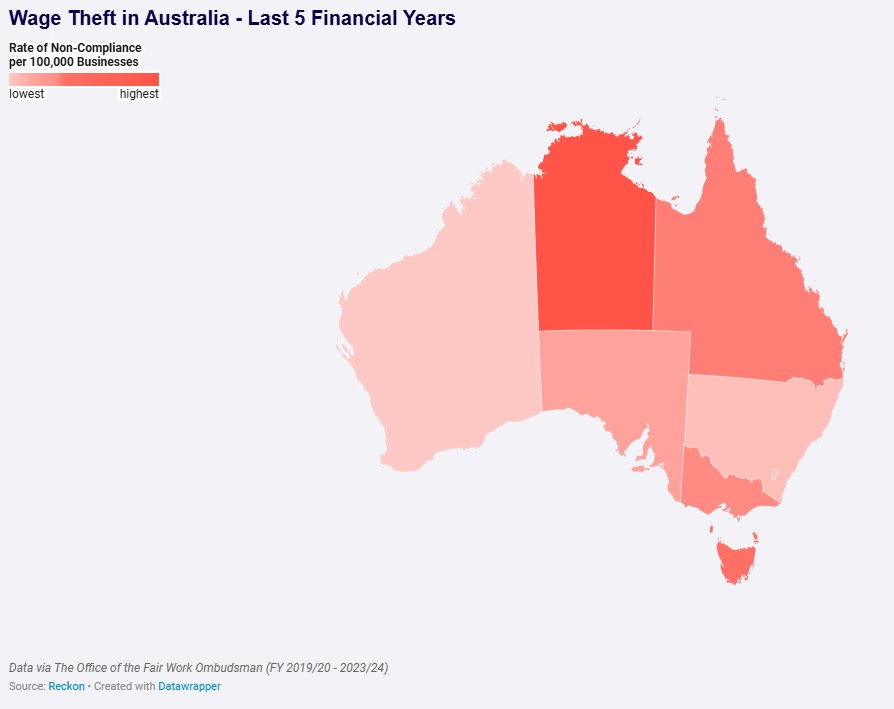
Wage theft was not evenly distributed across Australia. The Northern Territory recorded the highest rate of non-compliant businesses relative to its total, followed by Tasmania and Queensland. By contrast, larger states such as New South Wales and Victoria had more assistance requests overall, but lower rates of non-compliance when adjusted for the number of businesses. Western Australia recorded the lowest rate of non-compliance nationwide. The data also shows a notable shift in reporting patterns.
While most wage theft inquiries were still initiated by employees, self-reporting by employers has more than doubled in recent years, suggesting growing awareness of underpayment issues. Legislative changes, including laws in Victoria and Queensland that made wage theft a criminal offence from 2020, are also likely influencing compliance and enforcement outcomes.
Beyond the numbers, wage theft has a tangible impact on workers’ lives. Casual employees, younger workers, and those in hospitality and service industries are particularly vulnerable, often missing out on entitlements such as overtime, penalty rates, superannuation, and other allowances.
Over the five years, penalties for breaches increased sharply, reflecting the serious consequences for businesses found to be in violation.

Reckon CEO Sam Allert said the findings highlight the need for businesses to take proactive measures. “Staying compliant with wage laws is not just about avoiding penalties — it’s about fostering a fair and ethical workplace that benefits both employees and businesses,” he said.
“Regular payroll reviews, ongoing staff training, and the use of technology can help businesses stay on the right side of the law, while building trust with employees.”
The Reckon analysis serves as a wake-up call for Australian businesses of all sizes. While wage theft has been a longstanding issue, the data suggests it is becoming more visible as authorities increase enforcement and as employers begin to self-report more frequently. For workers, the report confirms that pursuing underpayments can yield significant results, with billions recovered and thousands of businesses held accountable.
As Australia continues to tighten regulations and improve oversight, both employers and employees are likely to see changes in how wage entitlements are monitored and enforced, but the challenge remains creating workplaces that are both fair and fully compliant.
Support our Journalism
No-nonsense journalism. No paywalls. Whether you’re in Australia, the UK, Canada, the USA, or India, you can support The Australia Today by taking a paid subscription via Patreon or donating via PayPal — and help keep honest, fearless journalism alive.
