

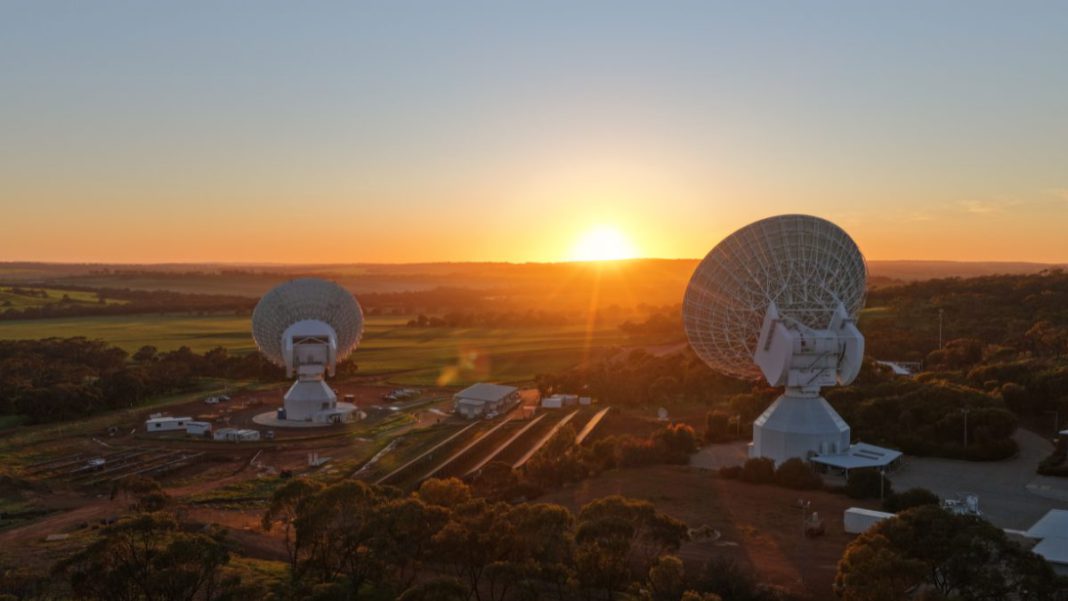
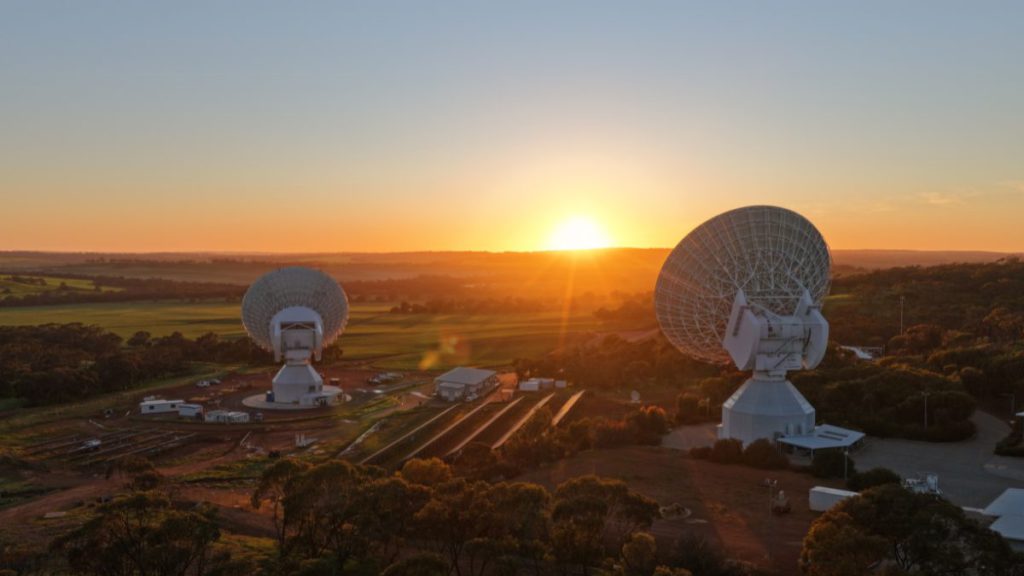
The European Space Agency has inaugurated a new deep space communication antenna in Western Australia, strengthening its ability to maintain contact with spacecraft travelling across the Solar System. The facility, known as New Norcia 3, is the fourth antenna in ESA’s Estrack tracking network and the second at the New Norcia site, about 120 kilometres north of Perth.
The 35-metre dish, which weighs roughly 620 tonnes, incorporates advanced technology to pick up extremely faint signals from faraway missions. Parts of its receiver system are cooled to almost minus 263 degrees Celsius to reduce interference, making it possible to capture data transmitted from billions of kilometres away.
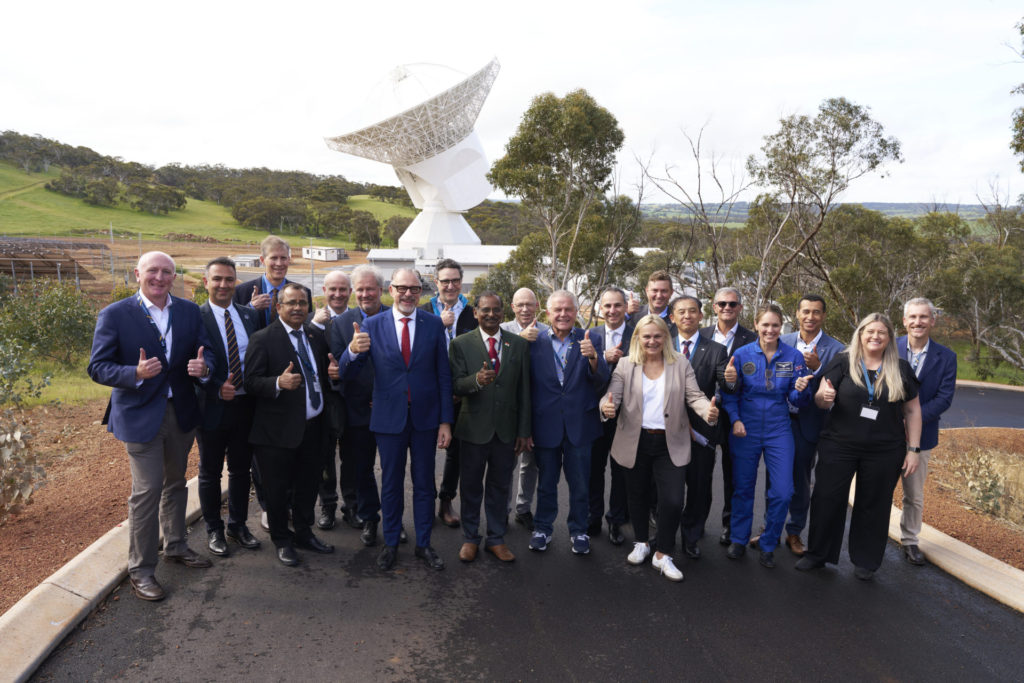
The inauguration was held on 4 October 2025 and marked a major expansion of ESA’s communication capacity for scientific, exploration and planetary defence missions. The ceremony was led by ESA Director General Josef Aschbacher, with Australian Space Agency Head Enrico Palermo and ESA Director of Operations Rolf Densing joining Western Australia’s Minister for Regional Development Stephen Dawson
Also present was Sabine Winton, the state’s Minister for Education, Early Childhood, Preventative Health and Wheatbelt, highlighting the cooperative effort between Europe and Australia in space science.
Once operational in 2026, the antenna will provide essential support for ESA’s current flagship missions such as Juice, Solar Orbiter, BepiColombo, Mars Express and Hera. It is also set to play a central role in future projects including Plato, Envision, Ariel, Ramses and Vigil, which aim to study distant planets, monitor the Sun and enhance planetary defence.
Officials emphasised that the addition of this antenna gives Europe not only greater independence in space communications but also a stronger foundation for long-term exploration. The location in Western Australia provides critical southern hemisphere coverage, making the station a vital link in global deep space tracking efforts. With this facility, ESA is positioning itself to meet the growing demands of space science over the coming decade.
Support our Journalism
No-nonsense journalism. No paywalls. Whether you’re in Australia, the UK, Canada, the USA, or India, you can support The Australia Today by taking a paid subscription via Patreon or donating via PayPal — and help keep honest, fearless journalism alive.
