

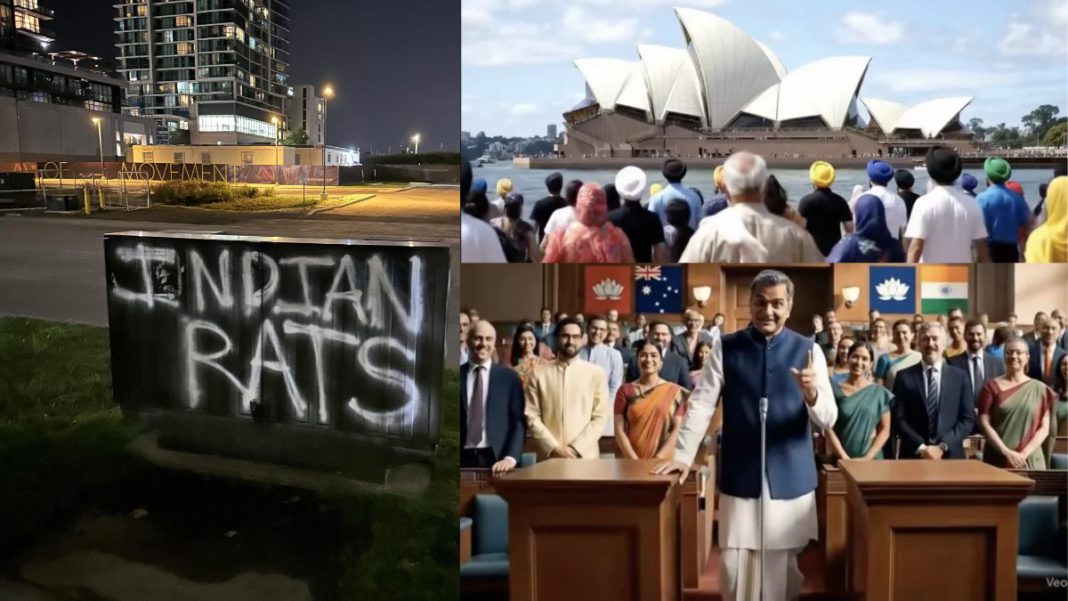
A hateful act of vandalism in Mississauga, where graffiti reading “Indian Rats” was discovered near a children’s park, has ignited outrage and renewed fears about a growing wave of racism and Hinduphobia directed at the Indian diaspora.
The Council of Hindus of North America (CoHNA) described the graffiti as “deeply disturbing” and part of a “broader pattern of intimidation and discrimination.” The group urged Peel Police to investigate the case as a hate-motivated crime and called for stronger anti-hate mechanisms at all levels of government.
For the Indian immigrant who photographed the graffiti, the attack felt deeply personal. “The Canada I chose to immigrate to had a reputation of being a country of the nicest people on God’s green earth. But in my three years here, I’ve faced so many incidents of racism that I’ve lost count,” they said, recounting repeated experiences of being mistaken for low-wage workers and subjected to “random” shopping cart checks.
“I’ve paid hundreds of thousands in taxes, rent, and services. I’m still committed to contributing, but can Canada do its part? At the very least, can we adhere to basic social decency?”
This story of prejudice is not confined to Canada. In Australia, a growing Indian community—long recognised for contributions in education, science, business, and healthcare—is facing a new wave of digital attacks fuelled by generative AI.

A series of viral AI-generated TikTok videos portrayed a dystopian “future Australia” under an Indian-origin prime minister, mocking Indian culture with distorted flags, caricatured accents, and fabricated policies such as adding garam masala to Vegemite.
Cybersecurity experts warn these clips, while framed as satire, are anything but harmless. Others have cautioned that such content blurs the line between humour and propaganda, normalising bias and encouraging harassment.

The danger of this normalisation has already spilled offline. After an Air India Express plane crash in Ahmedabad claimed more than 270 lives, social media platforms were flooded with racist slurs targeting Indian victims.
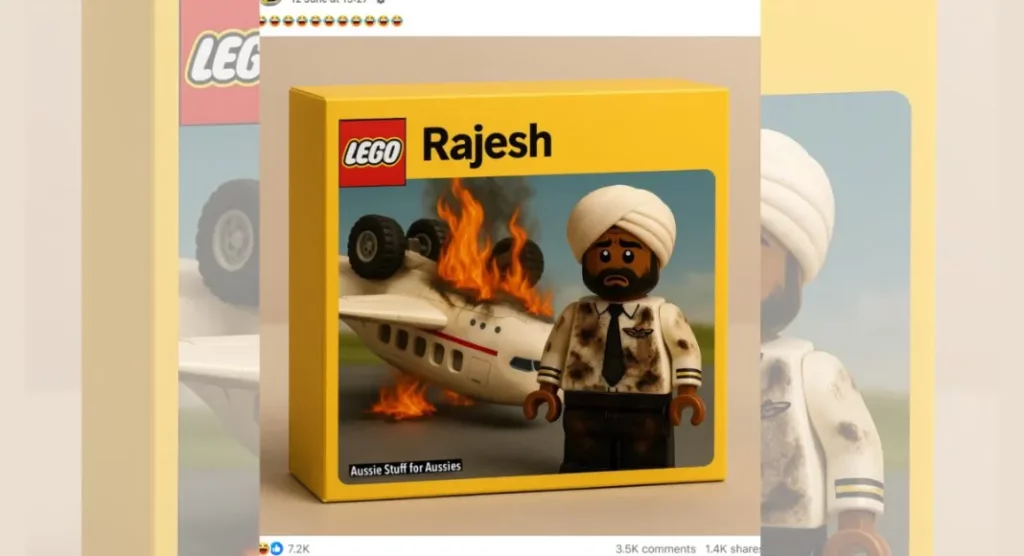
One could argue that hateful graffiti and inflammatory memes have become rallying tools for the anti-immigration protests held across Sydney, Melbourne, Adelaide and other cities.
As a result, many young Indian-Australians say they feel unsafe after facing racist taunts, while others report receiving threats linked to these rallies. The growing hostility is also seeping into the political discourse, further deepening divisions. Some in opposition even suggesting that the Indian diaspora votes predominantly for Labor.
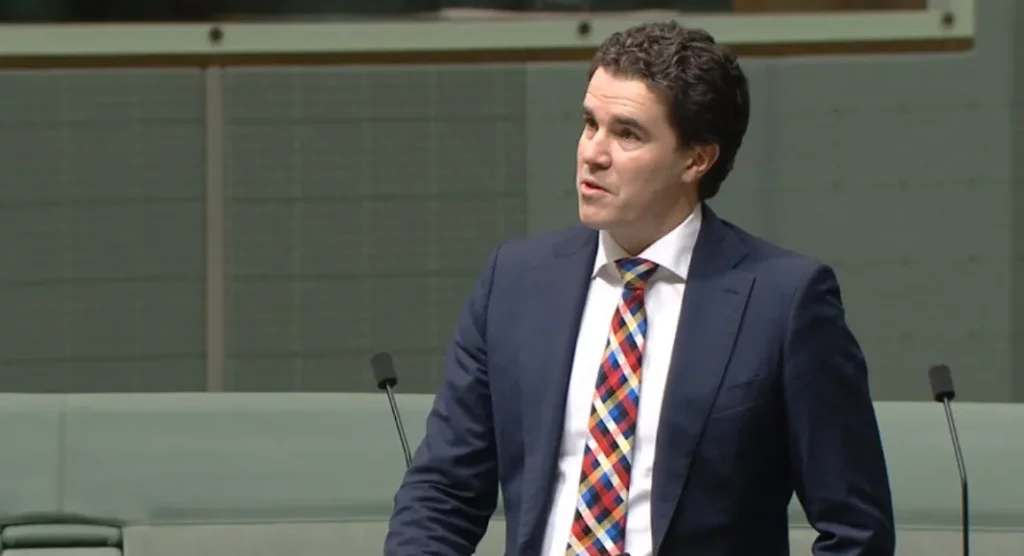
In July, Labor MP Tim Watts used a speech in Parliament to denounce the “emerging trend” of far-right groups singling out Indians in anti-immigration rhetoric. He criticised the use of AI-generated racist content and condemned lobby groups that spread divisive propaganda.
“Australia’s cohesion is not fixed—it requires active engagement and empathy.”
From playground walls in Canada to TikTok feeds in Australia, the Indian diaspora is increasingly caught in a crossfire of prejudice—both on the streets and in the digital sphere. Community leaders argue that while these attacks may appear isolated, together they signal a global trend of targeting a visible, peaceful and prosperous minority.
Support our Journalism
No-nonsense journalism. No paywalls. Whether you’re in Australia, the UK, Canada, the USA, or India, you can support The Australia Today by taking a paid subscription via Patreon or donating via PayPal — and help keep honest, fearless journalism alive.
