

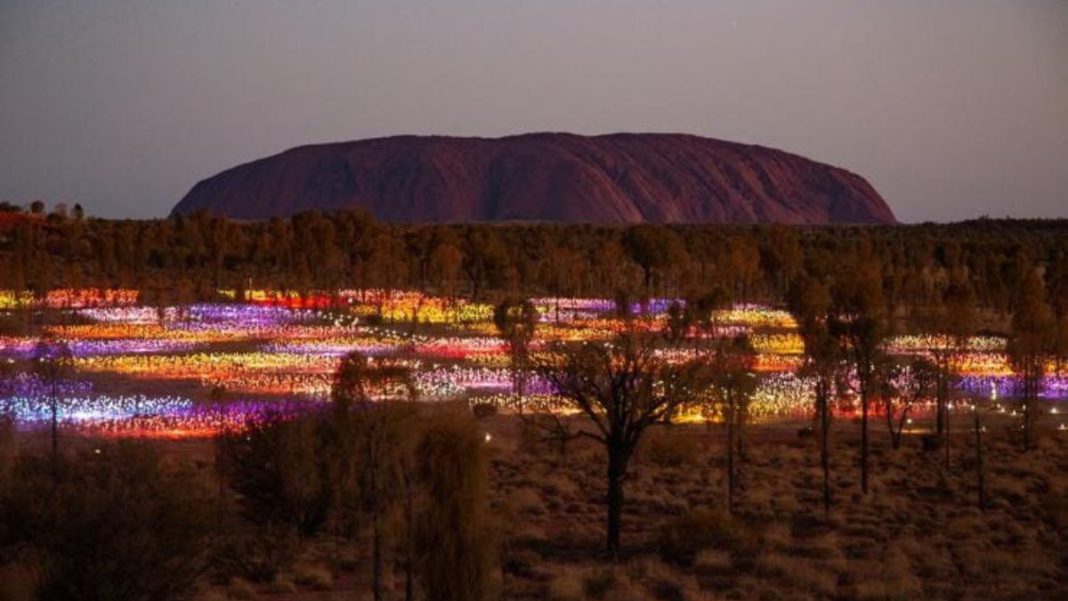
Britt and Tim Cromie, Aussie couple who share their travel adventures online, recently told followers they had no idea strict media guidelines apply at Uluru and Kata Tjuta, even for tourists posting to personal accounts.
Uluru, formerly known as Ayers Rock, is considered an iconic tourist destination by travellers but sacred by the Anangu people, and many areas of the site are off-limits to photography.
In an Instagram video, Britt said they were blind sided by a lengthy email citing 20 possible breaches linked to their YouTube upload and Instagram posts. “You have to apply for a permit, whether you’re a content creator, doing brand deals, or just posting personal socials,” she explained.
“We weren’t aware about that.”
According to rules, a photography permit at Uluru–Kata Tjuta National Park costs $20 per day for still images or $250 per day for filming, in addition to the $38 adult entry fee.
The couple applied for the permit retrospectively but were told months later that large sections of their content still broke the rules, despite them already removing footage of sacred sites.
According to Parks Australia, details and features on the rock are equivalent to sacred scripture for the Anangu.
“It is inappropriate for images of sensitive sites to be viewed elsewhere, so taking any photos of these places is prohibited,” its website states.
Since climbing Uluru was permanently banned in 2019, significant parts of the rock have also been declared off-limits to photography. Fines of more than $5,000 apply.
The couple had to overhaul their Uluru YouTube video and remove several Instagram posts to avoid fines under the Environment Protection and Biodiversity Conservation Act.
While emphasising their respect for Traditional Owners, the Cromies admitted they were caught off guard by how strict and confusing the rules can be. “There’s barely any info on the ground,” Britt said.
“You see a couple of signs that say don’t take photos here, it’s sacred, so we didn’t. But did you know you can’t swipe your face with a branch? We didn’t.”
They later discovered that Kata Tjuta’s Valley of the Winds walk is a complete no-photo zone, even though signage only mentioned restrictions at two lookouts.
The pair stressed they were not criticising the restrictions but wanted to warn others. “It’s a lesson for anyone heading to Uluru,” Britt said.
“Apply for a permit early, read the guidelines, and if in doubt, put the camera away.”
In a follow-up post, she added: “This isn’t about criticism or blame, just transparency and learning. Our goal was to share honestly and help fellow travellers avoid the same mistakes we made.”
Support our Journalism
No-nonsense journalism. No paywalls. Whether you’re in Australia, the UK, Canada, the USA, or India, you can support The Australia Today by taking a paid subscription via Patreon or donating via PayPal — and help keep honest, fearless journalism alive.
